Tyler Christiansen
SW Junior High Options
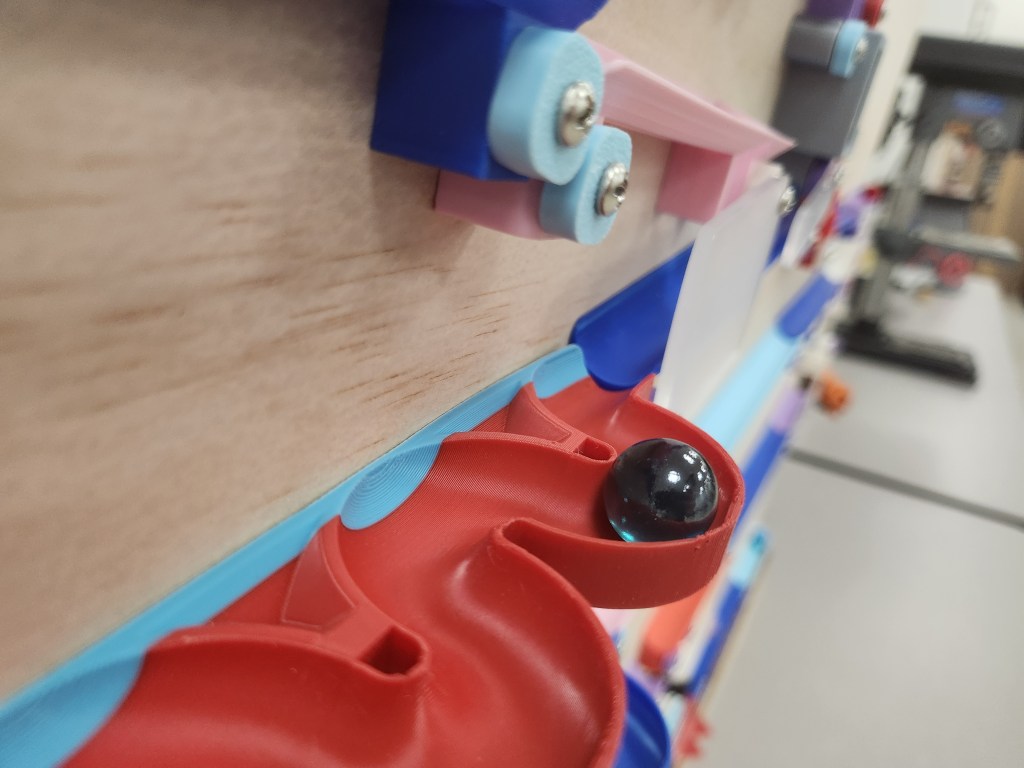
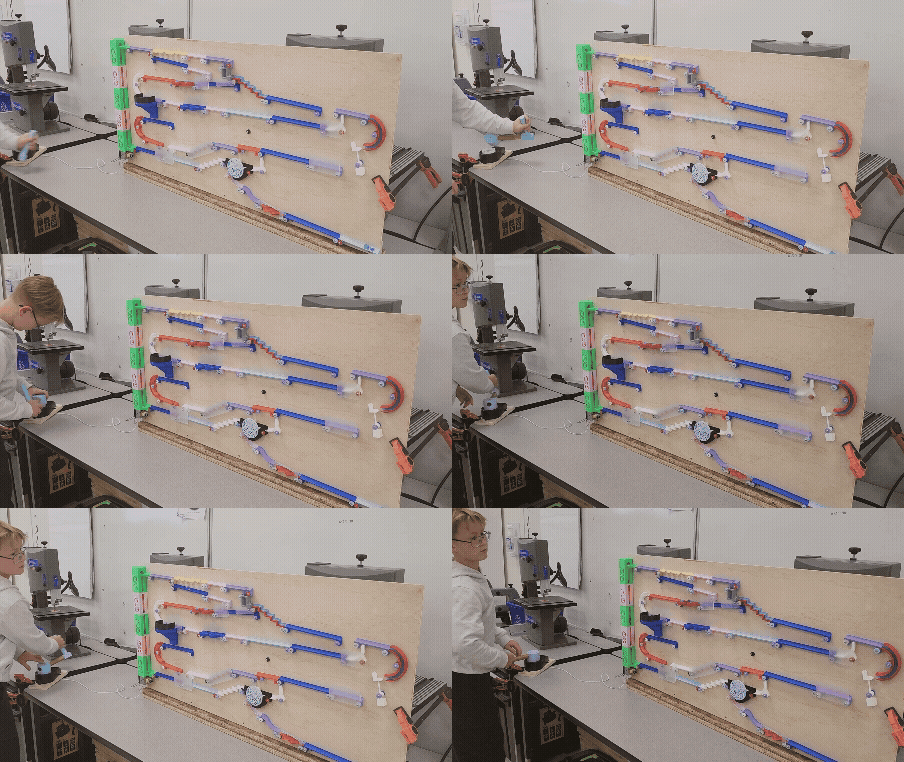
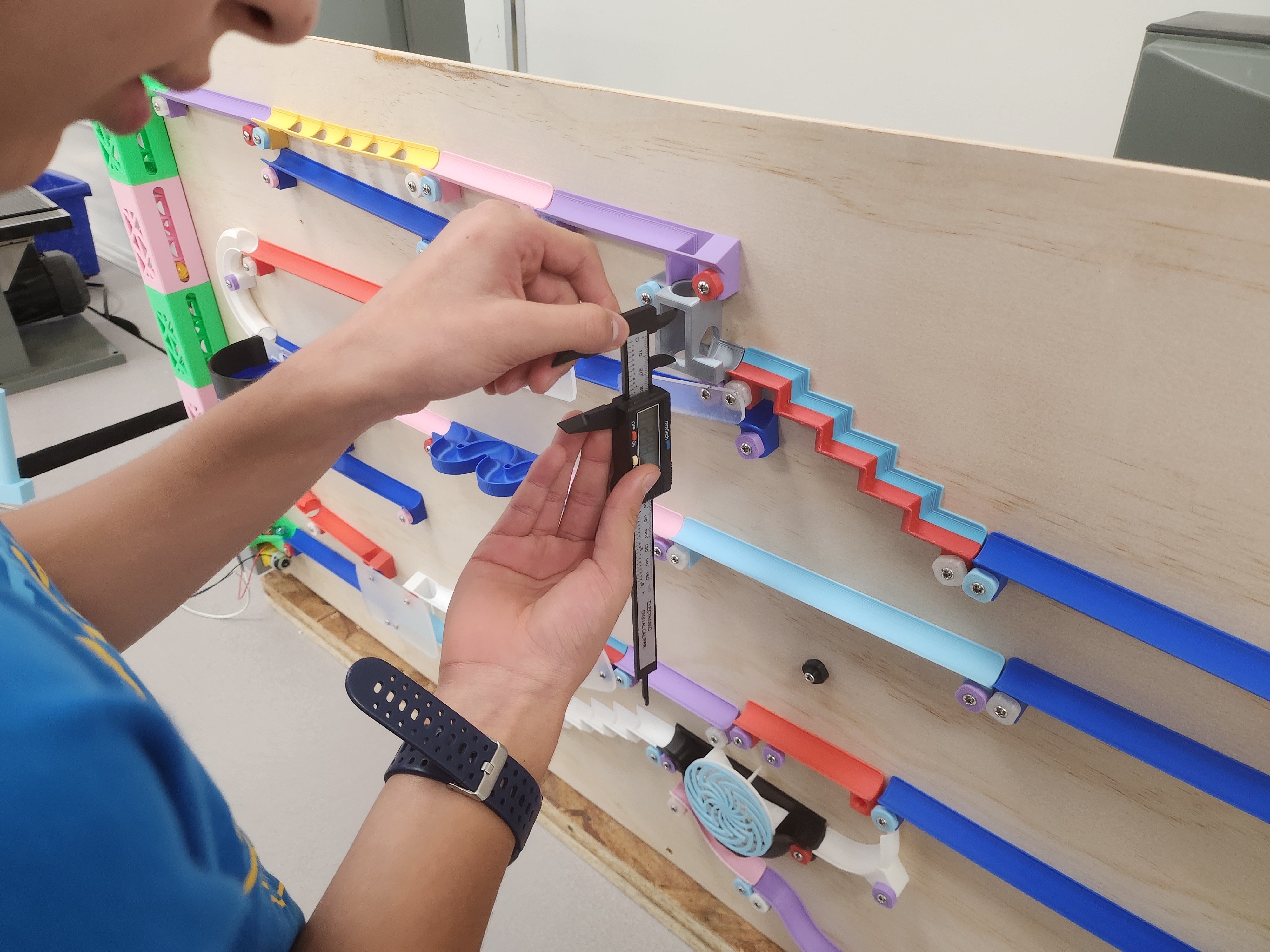
Walk into STEMIA’s Makerspace right now and you’ll see a 3D-printed marble run dominating the workspace. Crank the handle to get a marble to the top. Unfortunately, it won’t make it very far. Tracks have holes or are misaligned. There are large gaps between parts, or parts that need to be moved.
And it is broken entirely by design.
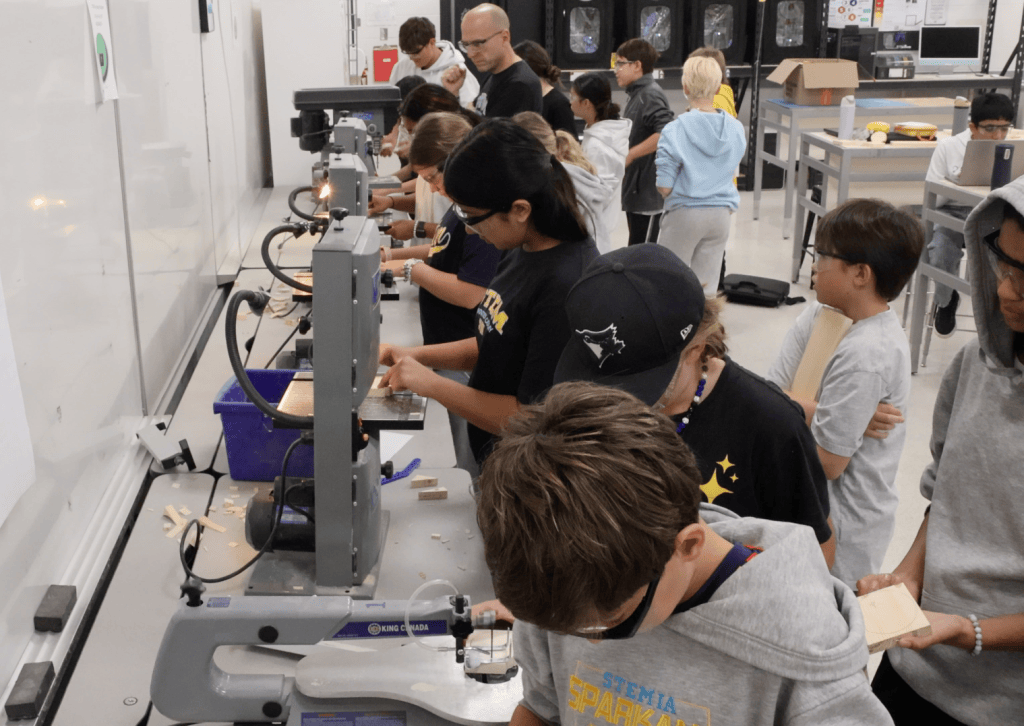
After spending a few classes learning the fundamentals of Onshape, our junior high students are diving into their flagship 3D printing project. Instead of handing them a step-by-step tutorial, they have been handed a physical problem that demands reverse-engineering, precision measurement, and iterative design.
The Challenge: Diagnose, Model, Print, Solve
To get a marble smoothly from start to finish, students can’t rely on guesswork or “eyeballing” a fix. They have to work through a true rapid-prototyping loop:
- Precision Measurement: Armed with calipers, students inspect the physical track to diagnose exactly why a section is failing—measuring gap distances, angles, wall thicknesses, and mounting tolerances down to the tenth of a millimeter.
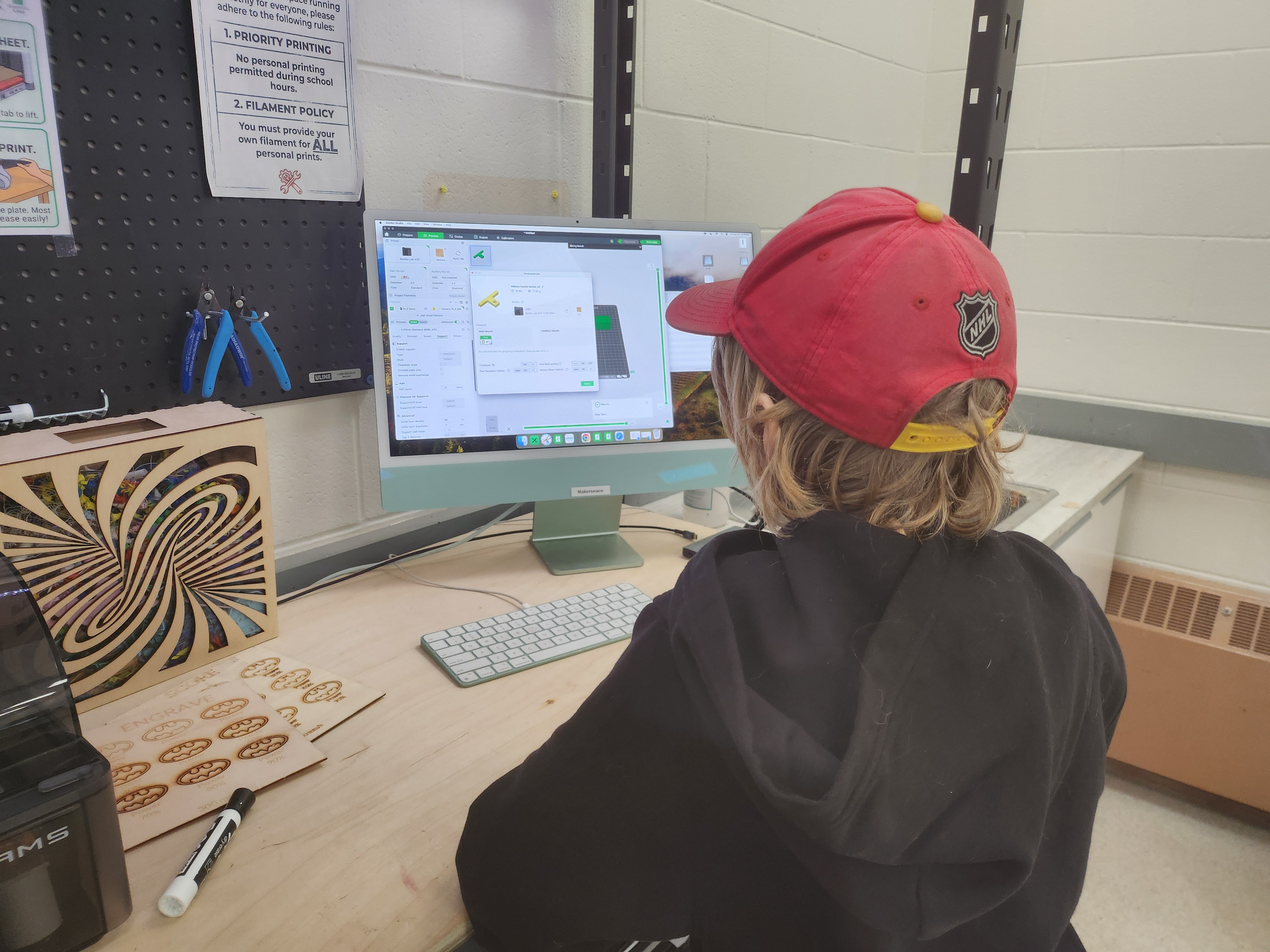
- Parametric CAD Modeling: Taking those real-world dimensions back to their screens, students model custom replacement tracks, adapters, and brackets in Onshape.
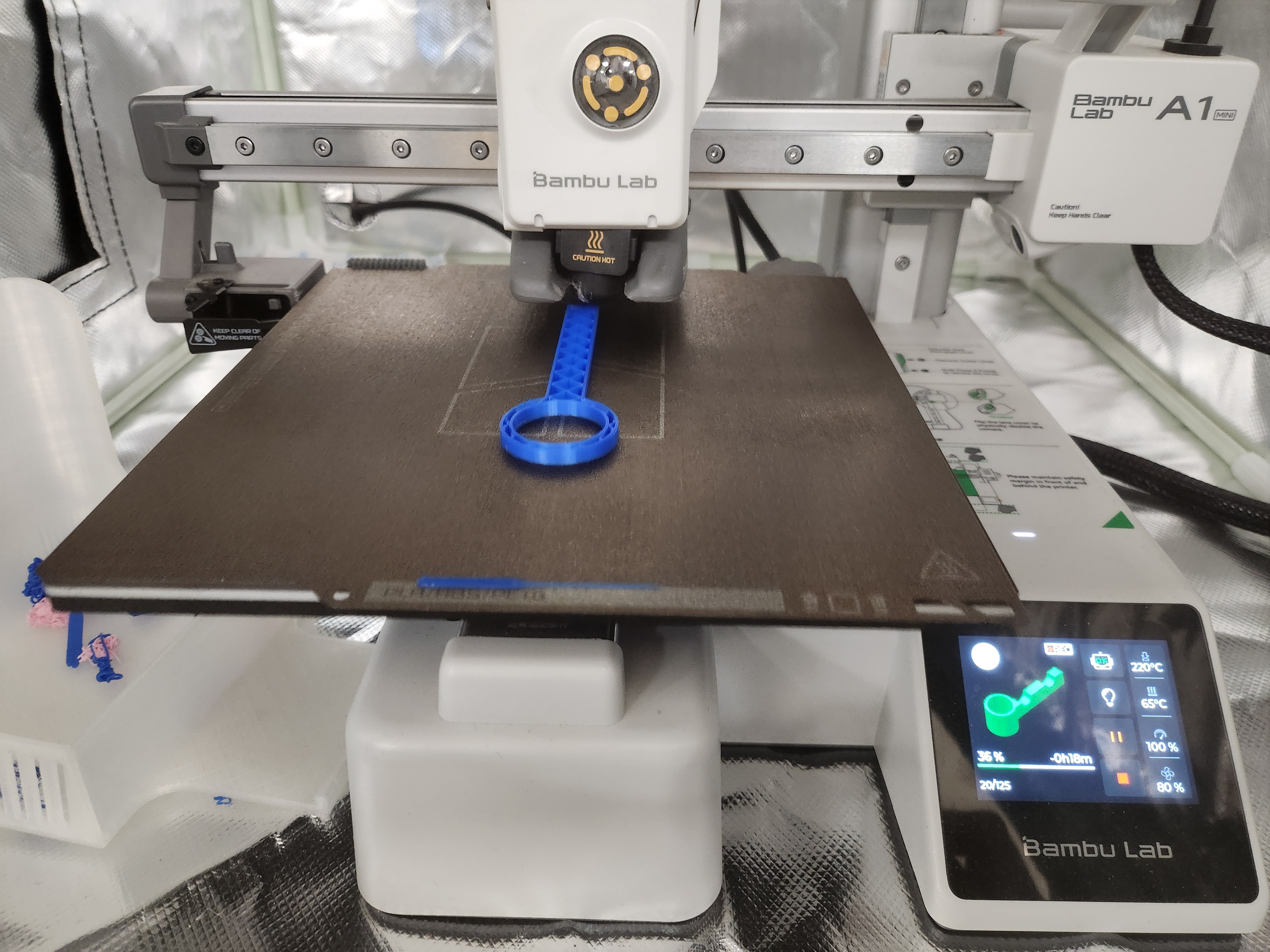
- Rapid Prototyping: Once a part is modeled, it goes straight to our suite of Bambu Lab A1 mini 3D printers. Because these machines print fast and reliably, students don’t have to wait days to see if their math works.
- Testing & Iteration: When a piece comes off the build plate, it gets snapped into the run for a live gravity test. If the marble jumps the track or stalls out, it’s back to the calipers and Onshape to tweak the geometry and print v2.
Why “Process Over Product” Matters Here
In a traditional classroom setting, a failed 3D print feels like a mistake. On this marble run, a part that doesn’t quite fit on the first try is simply data. Watching students huddle around a track with calipers in hand, debating clearance tolerances and print orientations before sending a revised file to the A1 minis, is the exact kind of troubleshooting that defines real engineering.
Beyond the Marble Run
While watching a glass marble navigate a custom-printed wormhole is undeniably satisfying, the real goal of this project goes far beyond the classroom wall. Computer-Aided Design (CAD) is one of the most transferable skills a young maker can acquire for themselves.
Whether a student eventually pursues mechanical engineering, architecture, industrial design, robotics, or skilled trades, the workflow remains identical: measure an existing constraint, design a solution, prototype it, and refine it based on physical feedback. By learning how to translate physical measurements into accurate digital models today, students are building the exact problem-solving toolkit they’ll use to design everything from custom prosthetics and aerospace components to architectural hardware tomorrow.
Problem solving for the win.