
By Tyler Christiansen
STEMIA Junior High Options
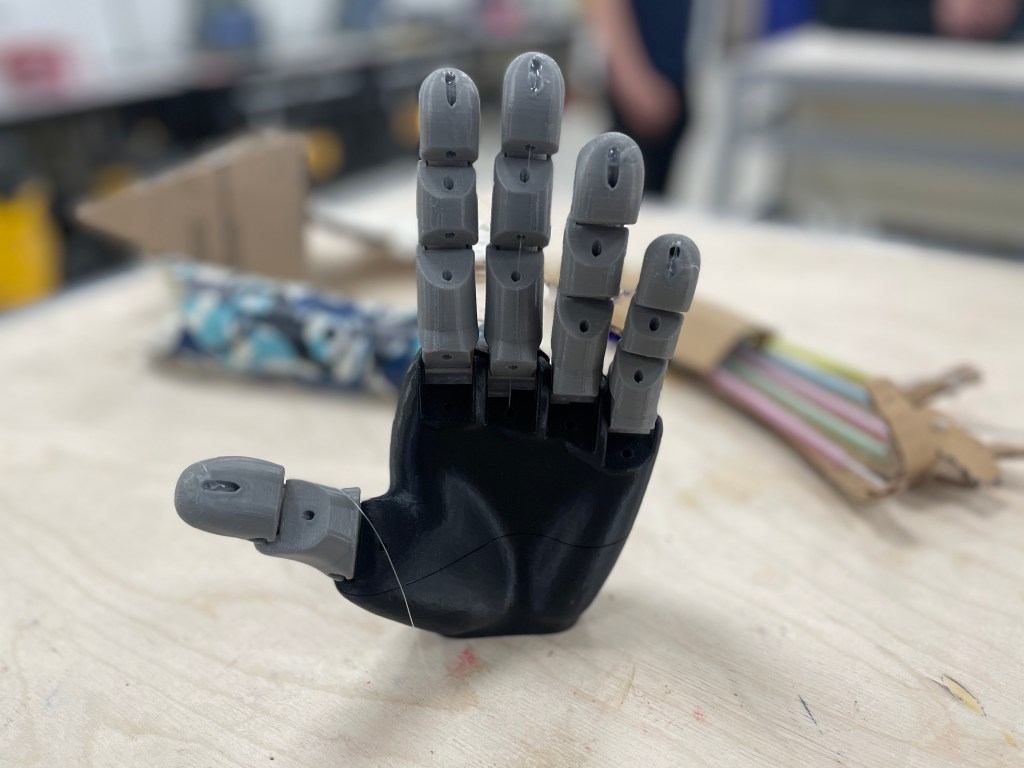
In our Biomedical Engineering course, students stepped into the shoes of real-world designers by creating prosthetic prototypes tailored to a patient’s needs. But these weren’t just any patients—each student interviewed an AI-generated patient through ChatGPT, learning about their daily challenges and mobility goals. This exercise helped students develop a deeper understanding of how prosthetic design must be both functional and personalized.
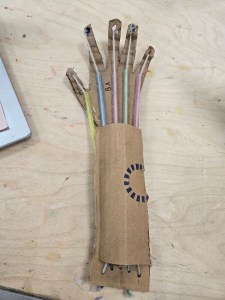
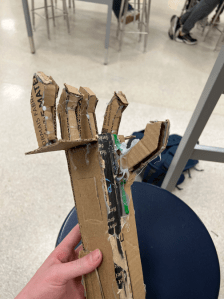
With their patient profiles in mind, students built prosthetic prototypes using simple yet effective materials—clay, cardboard, and hot glue. These hands-on models allowed them to quickly explore different designs, from grip-enhancing tools to adaptive attachments for everyday tasks. By working through the design process, students learned the importance of iteration, problem-solving, and creative thinking in biomedical engineering.
This project wasn’t just about building something—it was about applying empathy to engineering. By combining AI-driven insights with hands-on prototyping, students saw firsthand how innovation starts with understanding people’s needs. Their work demonstrated how even basic materials can be used to explore real-world biomedical challenges.
Previous BioMed Blog Posts:
 STEMIA Journal