


STEMIA Junior high was lucky to have been chosen as a recipient of the A+ for Energy grant for the 2023-24 school year. This grant helped us create a solar powered energy fountain where solar panels and a wind turbine power a water pump in a hydroponic garden for our school.
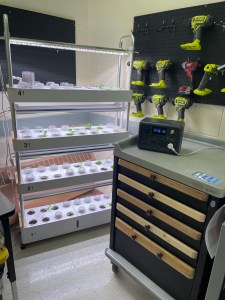
Our Skills Challenge Club, who meet on Tuesday’s at lunch, began by building a fountain and then their own hydroponic system using some PVC pipes and an electric water pump that we powered with our Solar Power Stations purchased with the grant. We also ordered a more sophisticated system online that has 96 pods for planting our vegetable seeds. The students in the club maintained the garden by monitoring the solar batteries, the water levels, and the plants. We also had to add liquid fertilizer weekly to keep the plants growing.
Our grade 9 science team is excited to have the solar panels, wind turbine and power stations to inspire their work in the Electrical Principles and Technologies curriculum and our Our grade 7 science team is excited to use the system as well for their Plants for Food and Fibre unit this spring and fall.
It would be great to see some of the plants we are growing find a home in our school gardens or the gardens of our school families around the city.
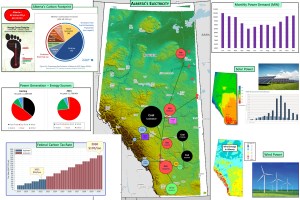
A second element of the grant was the development of the “Alberta Power Game” with our partner in the project Mr. Robin Owens, who is a local retired geophysicist. The Alberta Power Game introduces students to Alberta’s power grid and the different sources of energy production in our province, as well as the demand on the grid. Students use Excel spreadsheets to manipulate different variables to meet the challenges of providing energy to the province, while considering regulations and climate action goals.
Additional challenges are added, where students have to meet increased demand or changes in regulations including the potential supply and demand combinations that may enable Alberta to ..“reach a net-zero electricity system by 2035 while also considering potential implications to reliability, the market, and supply and transmission costs.” Students were also exposed to the concepts of intermittent electrical production and reliable baseload power for the grid.
The solar panels, both mounted and portable, as well as the Solar Power Stations and Wind turbine will continue to be used in our school for this project and many new ones. We are grateful to Inside Education for the A+ for Energy grant and their funding partners BP Canada, TC Energy, Cenovus Energy, and Pembina Pipeline Corporation. We also want to thank Robin Owens for all his work on this project and his partnership beyond it.
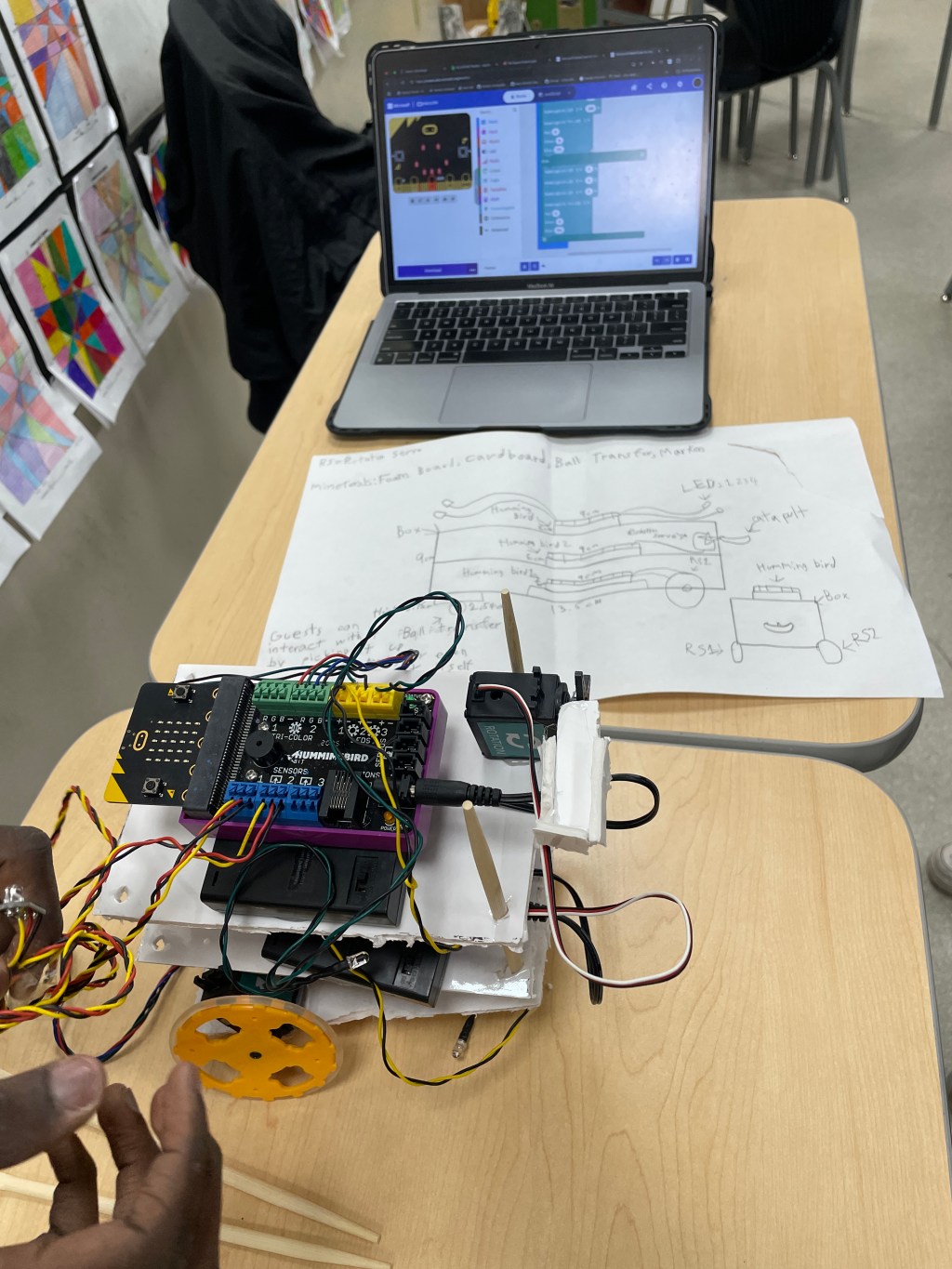
What’s our next step? Come and see our Solar charged furniture vehicle that we have entered for the Beakerhead Hack the House challenge at Telus Spark in September 2024.
 STEMIA Journal