




Big Ideas:
– Good ideas become great ideas when they’re given the time, space, and collaborative energy to incubate.
– Collaborative design for learning requires time, intention and practice.
– A school staff functions best with a common vocabulary and reflection.
Norms:
- Be Fully Present: put 100% of your focus on the task at hand and sequence to tasks in a row, as opposed to splitting your focus on many tasks simultaneously. (put the device away:)
- Adopt a beginner’s mindset: “In the beginner’s mind there are many possibilities, in the expert’s mind there are few.” Suzuki, Shunryu
- Embrace Radical Collaboration: Lean in, take risks, get creative, embrace discomfort and have an awareness of your role in creating an engaging atmosphere.
- Bring a Creative Commons Mindset: All of the work is all of our work. Through sharing, eliciting and providing feedback to each other and exhibiting what we’ve created our work will be exponentially better.
- Make Learning Visible: “Making a process visible makes a practice reflect-able” ~ John Maeda.
Driving Questions:
– What is a unit, project, outcome or opportunity that we would like to design or redesign?
– What are the universal supports and individual supports necessary in our instructional design for 100% student engagement and 100% student success?
– How might we infuse STEM explicitly in the learning?
Deliverables:
– A succinct pitch that explains your idea and connects to POS outcomes and learning objectives.
– A visual learning journey sketching the scope, sequence and scaffolding for the learning.
Agenda:
8:30am Stand Up Meeting
– Agenda for the Day
– Norms for collaboration and a connection to the Marzano High Reliability Schools™ framework. (a description of the framework and ‘levels’ can be found here: https://www.nyos.org/apps/pages/marzano)
What to focus on when we meet as a PLC:
- What do we want all students to know and be able to do?
- How will we know if they learn it?
- How will we respond when some students do not learn?
- How will we extend the learning for students who are already proficient?
– Planning and work time for grade teams to complete weekly messages and decide on a unit or project to bring to the design session. What is something that could use a redesign or reimagining?
8:20am Individual and grade team planning
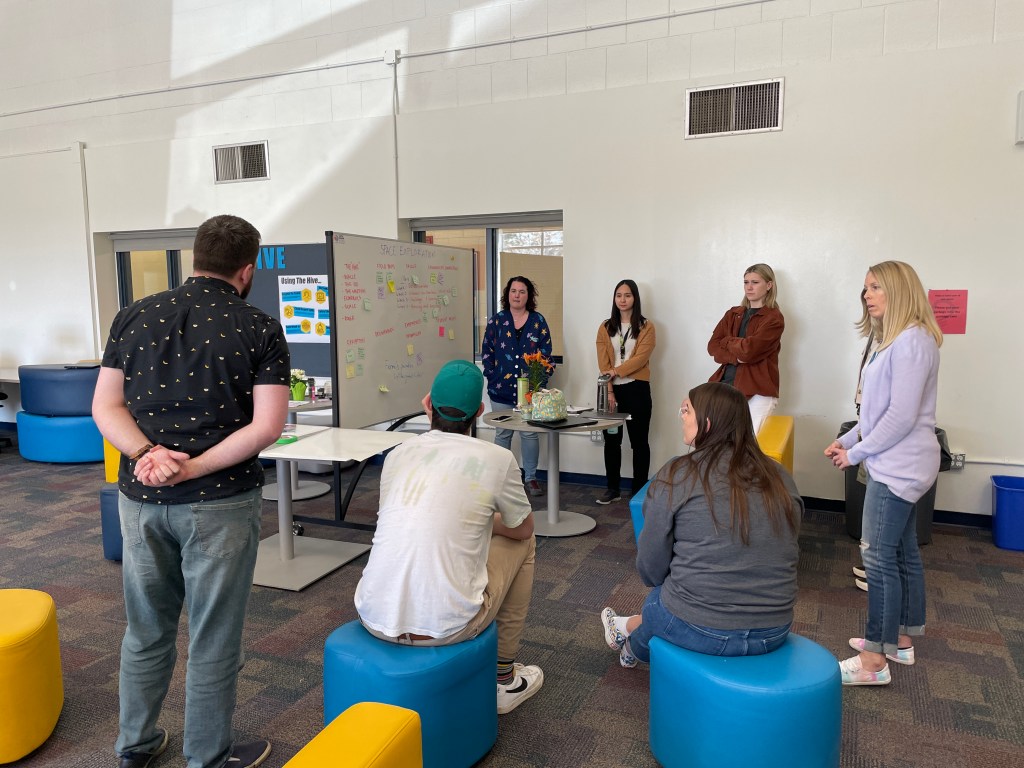
10:30am Project Idea and preliminary ideation
– Create your Pitch Statement
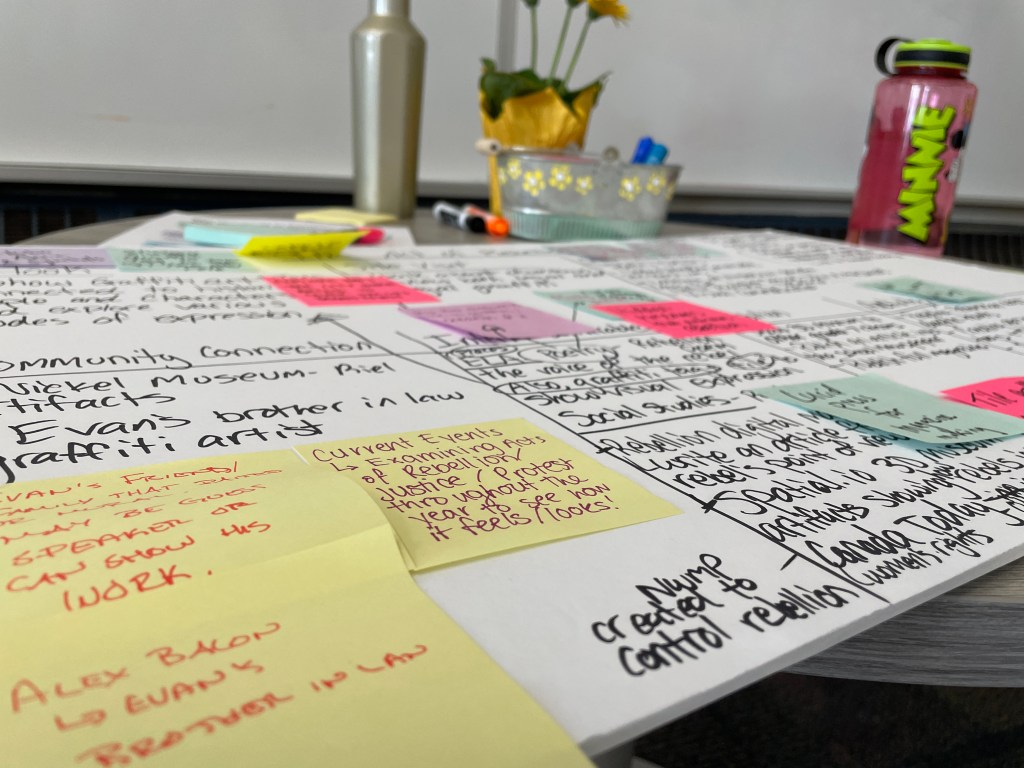
– Using the Inventory Ideation Tool to brainstorm answers to the driving questions.
– Stack sticky notes on each of the areas.
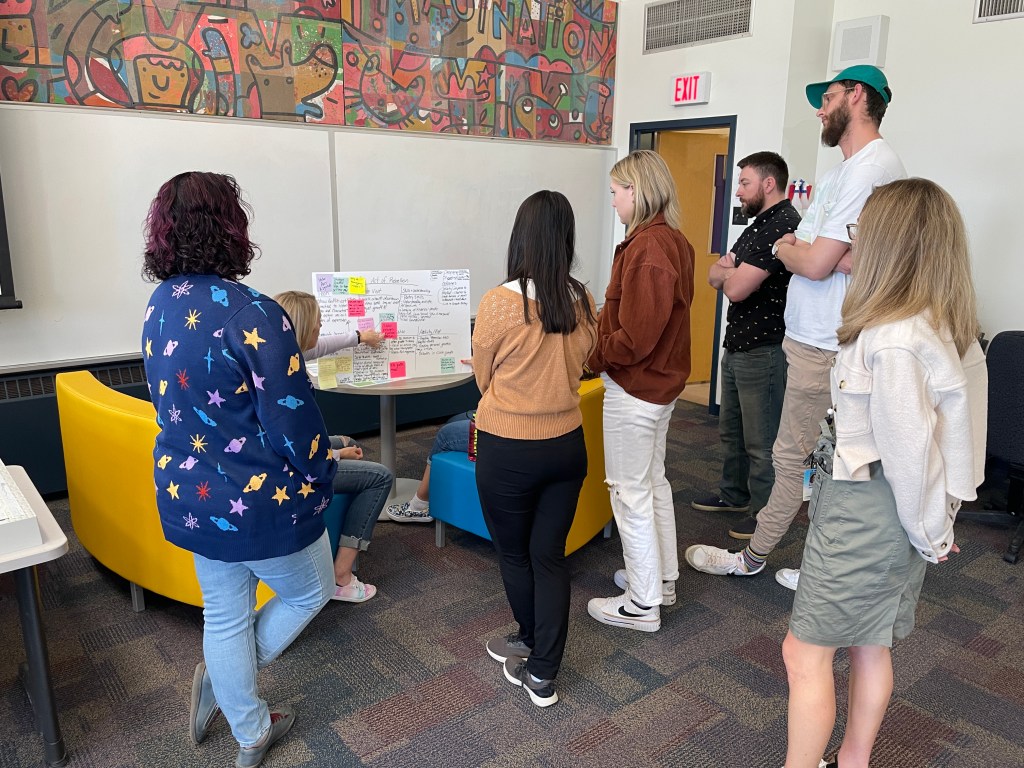
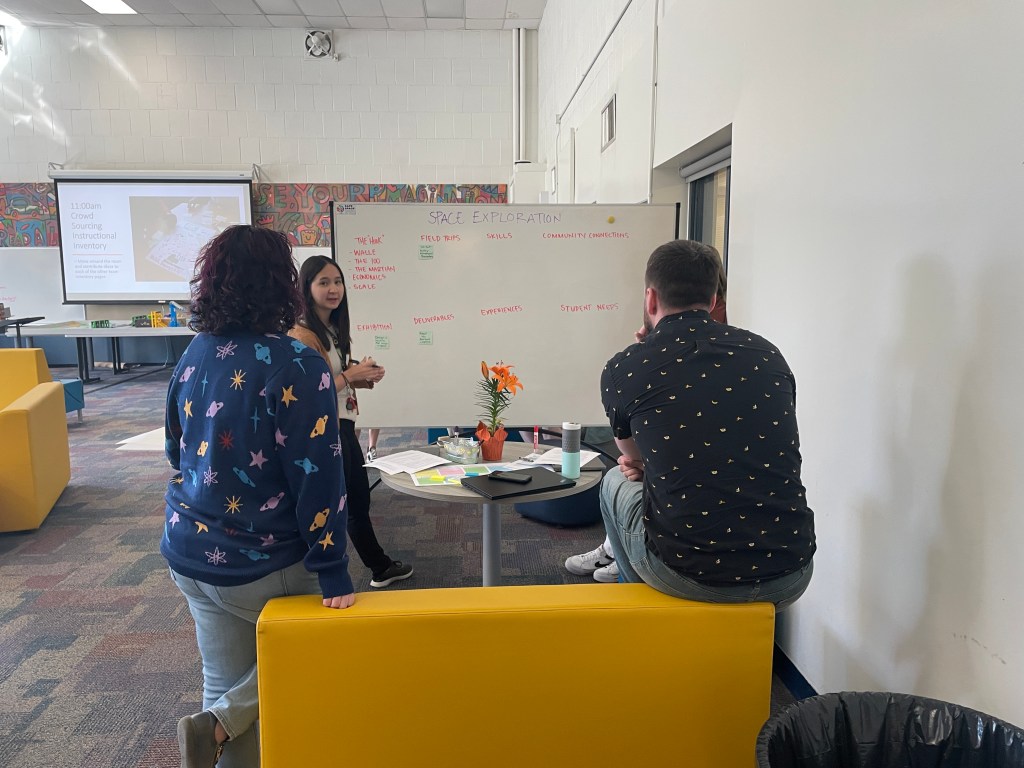
11:00am Crowd Sourcing Instructional Inventory
– Move around the room and contribute ideas to each of the other team Inventory pages.
11:20am ‘Publish’ you Pitch. Sort and Plot promising post its.
– Review your sticky notes and begin to lay out the promising ideas in a scope and sequence toward the final deliverable or summative action or assessment.
– Add nodes or stickies for skill scaffolding, COPs, and more.
11:50am Design and Dine Time
– Time for snacks, a walk, reflection, coffee etc.
12:10pm STEM Showcase
– Sharing some of the STEM integration stories.
12:30pm Design Team Feedback
– Share your pitch and learning map to another team.
– Receive ideas for meaningful STEM integration.
– Receive feedback on questions you may have generated about your plan.
1:00pm What is our RTI model of supports?
– What is differentiation, accomodation, and modification?
1:30pm Finalize the Project Pitch and develop Learner Insights.
– Reflect on the learning journey you’ve created using the UDL checklist to identify what’s working and what might be missing.
– What will we need to consider or design for 100% student engagment and 100% student success?
2:00pm Showcase Gallery Walk.
 STEMIA Journal